
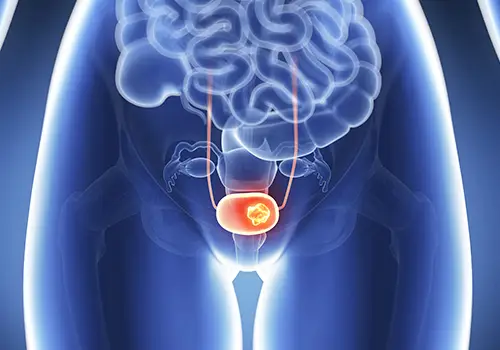
Bladder cancer typically affect older adults and is one of the most common cancers, about 68,000 men & women are diagnosed each year.
The bladder is a hollow organ that serves as a reservoir for your urine. Once it is full, urine is expelled and the bladder deflates, similar to a balloon. Bladder cancer is an abnormal growth of the urothelial cells (the cells that line the inside of your bladder wall). There are two general stages of bladder cancer, superficial and muscle invasive. In additional, there are two grades of bladder cancer, low grade and high grade diseases. The treatment management for bladder cancer will be dependent on pathological finding of the grade and stage.
Risk Factors
- Prior family history
- Smoking or other tobacco use
- Certain chemical exposures
- Prior radiation exposure
- Chronic bladder inflammation / foreign body
- Prior parasitic infections
- Prior urothelial cell cancer of the kidney or ureter
- Increasing age
- Men are at increased risk
Symptoms
- Symptoms may include:
- Blood in the urine (microscopic or visible)
- Painful urination
- Frequent urination
- Back pain or pelvic pain
- Weight loss
Types & Stages
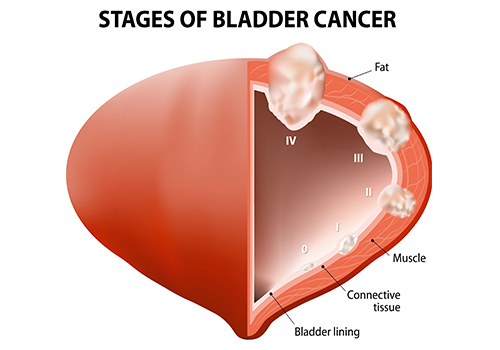
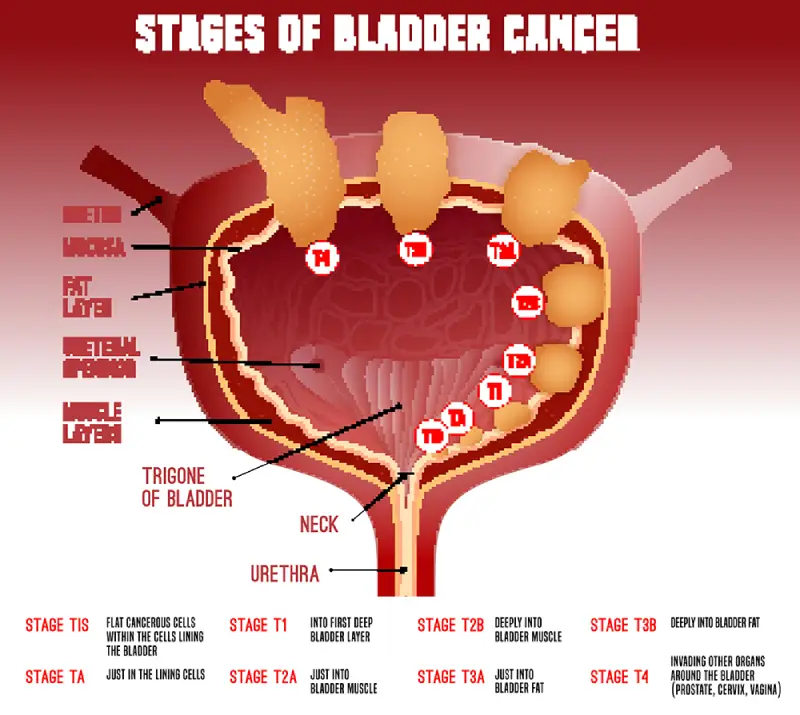
There are two main stages of bladder cancer
Superficial: The bladder cancer involves only the superficial layer of the bladder wall
Muscle invasive: The bladder cancer has invaded into the muscle layer of the bladder wall
There are two main types of bladder cancer
Low grade bladder cancer: Typically less aggressive and usually does not progress to invasive bladder cancer
High grade bladder cancer: More aggressive subtype with a higher likelihood of recurrence and an increased potential for invasion into the muscle layer of the bladder wall
Your urologist will be able to tell you the grade and stage of your disease and your treatment options after appropriate imaging (CT scan, MRI or ultrasound) tumor biopsy and evaluation by a pathologist.
Treatment Options
Superficial bladder cancer
Usually, superficial bladder cancer is treated without a surgical incision using endoscopic transurethral resection of the cancer using a camera and very small instruments. This procedure is intended to remove the tumor completely and to get information about the tumor’s grade and level of invasion
Subsequently, your urologist may advise additional topical intravesical medications that decrease the risk of recurrence and progression. (Intravesical – medications delivered through a foley catheter into the bladder only)
Muscle Invasive bladder cancer
Muscle invasive bladder cancer occurs when the cancer has invaded into the muscle layer of the bladder wall. It is critically important to identify this because there is a much higher risk of the cancer spreading outside of the bladder. Thus, more aggressive treatment management is typically indicated.
There are two main treatment options for muscle-invasive disease:
- Surgical removal of the bladder +/- chemotherapy
- Chemotherapy and radiation of the bladder
If you have been diagnosed with muscle invasive bladder cancer, our multidisciplinary team of oncologists, radiologists, pathologists and urologic oncology specialists will work with you to determine the best treatment option to definitively treat your disease while focusing on your individual concerns & priorities.